


When it comes to safety while skiing and riding, your decisions and actions have a direct impact on your safety and the safety of those around you. Following Your Responsibility Code gives you the tools to have the safest possible day on the slopes.
“Skiing and snowboarding are fun and exciting sports, but they’re also defined by law as inherently risky,” points out Melanie Mills, President and CEO of Colorado Ski Country USA. “Every skier and rider can contribute to a positive on-hill experience by following the ten points of Your Responsibility Code. Knowing and obeying the Code helps you have the safest possible day on the mountain and stay in compliance with Colorado law.”

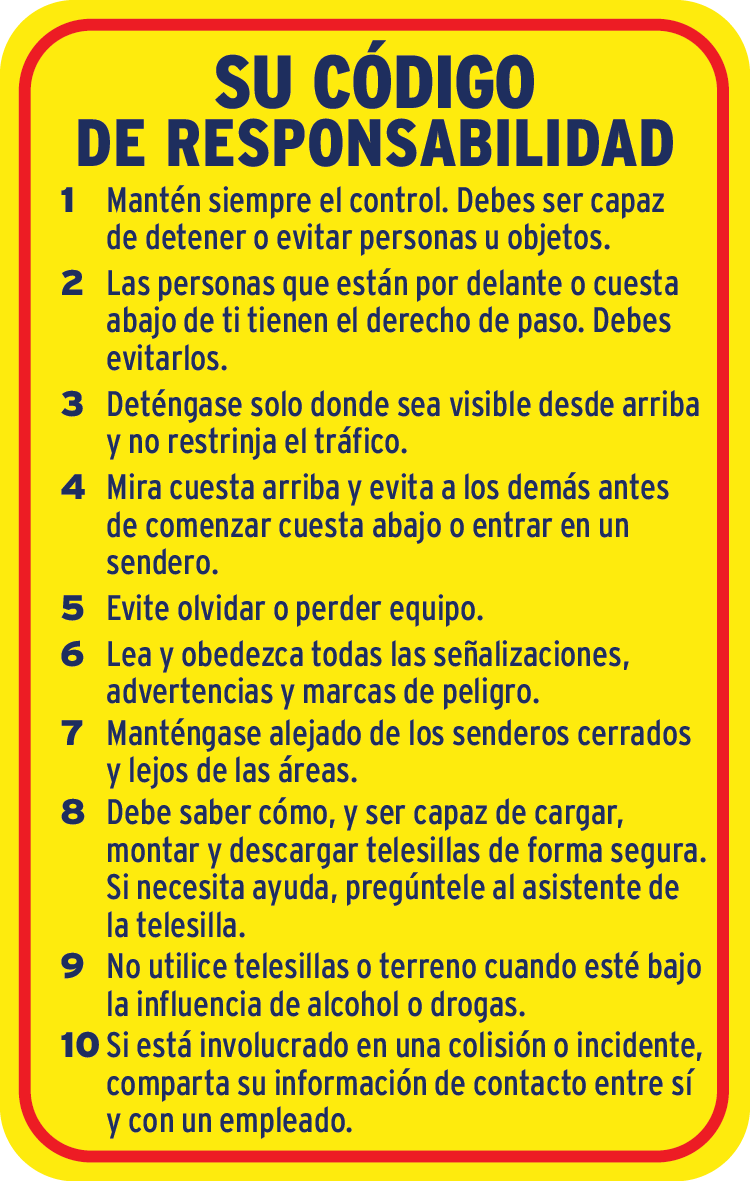
Think of Your Responsibility Code as “the rules of the road” when it comes to sharing the slopes here in Colorado, and at ski resorts around the United States.
Skiing and snowboarding in control is the most important thing every skier and rider must do on the slopes.
Staying in control means:
Control is skiing and riding with awareness, intention, and enough distance from other skiers or objects to react safely. When we all ski and ride with that mindset, it contributes to a better day for everyone.
Watch our video Staying in Control with Penny the Patroller for tips and reminders about staying in control, being aware of your surroundings, and skiing or riding within your ability.
Riding a chairlift is part of the fun of skiing in Colorado, and it is also part of Your Responsibility Code. Knowing how to load, ride and unload lifts safely helps everyone get from the parking lot to powder day quickly and confidently.
Not sure how to ride a chairlift?
Ask a lift attendant, they’re happy to help. Consider taking a ski or snowboard lesson. You can also visit our Lift Safety page to watch educational videos that walk through how to ride the lifts step by step.
Helmets are a standard piece of ski and snowboard gear. They add meaningful protection when the unexpected happens. We urge skiers and riders of all ages to wear a helmet whenever they’re on the slopes. Visit our Helmet Safety page for more guidance and helpful information.
The slopes are shared by people of all ages, abilities, and comfort levels, and sometimes collisions happen. Staying aware of your surroundings, managing your speed, giving others space, and making thoughtful decisions on the mountain are some of the best ways to reduce the risk of colliding with another skier, rider, or object. For deeper guidance on awareness, control, and how to reduce the risk of collisions on the slopes, visit our Collision Safety page to learn more.
If a Collision Happens
If you’re involved in a collision or incident, stay on the scene and share your contact information. Check on the people involved and notify a ski area employee or Ski Patrol for more assistance.
Colorado hosts millions of skier and snowboarder visits each season. Your decisions and actions on Colorado’s shared slopes contribute directly to everyone’s safety- including your own.

